Why Choose a Nature-Based Early Years Environment?
Updated: Sep 3
Young children learn through direct experience: moving, observing, touching, building, caring and exploring. A nature-based educational environment gives them daily opportunities to engage with the real world while developing independence, confidence, concentration and curiosity.
At Riselva, nature is not an occasional activity or excursion. Indoor and outdoor spaces form one educational environment, and children spend substantial time outdoors throughout the year. Combined with Montessori principles, creative expression and meaningful practical work, this creates a calm and purposeful approach to early childhood education.
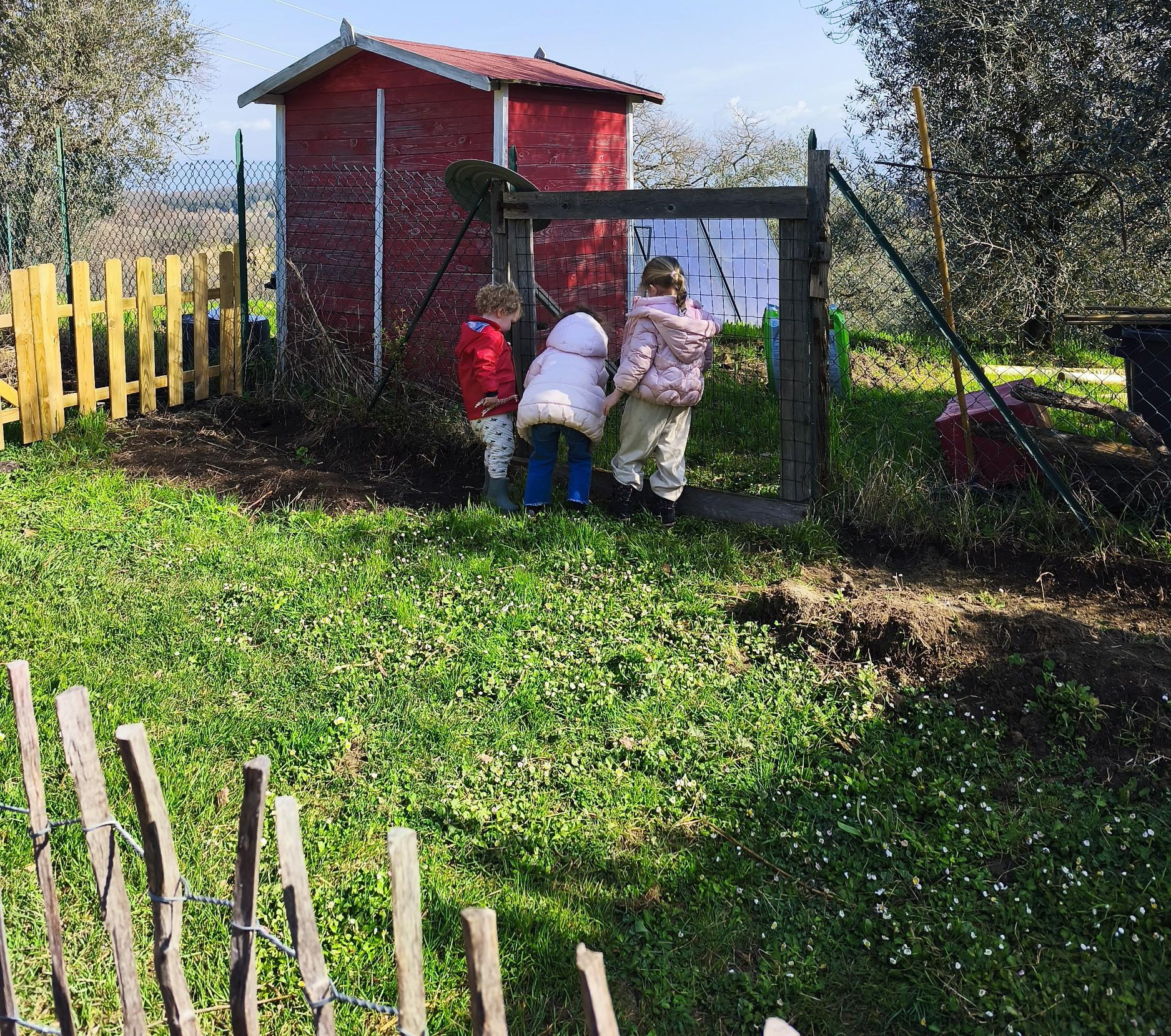
Why Nature-Based Education Matters in the Early Years
Young children learn through direct experience: moving, observing, touching, building, caring and exploring. A nature-based educational environment gives them daily opportunities to engage with the real world while developing independence, confidence, concentration and curiosity.
At Riselva, nature is not an occasional activity or excursion. Indoor and outdoor spaces form one educational environment, and children spend substantial time outdoors throughout the year. Combined with Montessori principles, creative expression and meaningful practical work, this creates a calm and purposeful approach to early childhood education.
Understanding Nature-Based Early Years Education
Nature-based early years education places direct experience with the natural world at the centre of everyday learning. Children spend substantial time outdoors exploring, observing, playing and taking part in practical activities. Rather than treating nature as an occasional excursion, indoor and outdoor spaces are understood as equally valuable environments for learning, development and discovery.
What does this look like in practice?
A nature-based environment may include gardens, fields, woodland and other natural spaces that children can explore regularly. Children are given time for free play as well as purposeful activities guided by educators.
They might observe insects, collect natural materials, care for plants, dig, build, measure water, prepare food or notice how the landscape changes through the seasons. These simple experiences create opportunities for physical development, language, mathematical thinking, creativity and cooperation.
The Benefits of Learning in Nature
Physical confidence
Outdoor environments naturally invite children to move in varied ways. Walking over uneven ground, climbing, balancing, carrying, digging and building develop coordination, strength and spatial awareness.
Unlike fixed indoor environments, nature changes constantly and encourages children to adapt their movements, assess situations and become increasingly confident in their physical abilities.
Curiosity and thinking
Nature offers endless opportunities for observation and discovery. Why has a leaf changed colour? Where does rainwater go? How many seeds fit into a container? What lives underneath a stone?
Questions emerge naturally from children's experiences. Educators can build on this curiosity through conversation, observation, simple experiments and appropriate learning materials, helping children develop early scientific and mathematical thinking.
Creativity and imagination
Natural materials rarely have only one purpose. A branch can become part of a structure, a collection of stones can become a pattern, and clay, sand, water and leaves can be transformed in countless ways.
Open-ended materials and time for storytelling, art, music and movement allow children to experiment with their own ideas rather than always working toward a predetermined result.
Relationships and cooperation
Outdoor life also creates many opportunities to work together. Children negotiate how to build something, help carry materials, care for a garden, solve disagreements and share discoveries.
These everyday experiences support communication, empathy, collaboration and a growing awareness of other people.
A relationship with the natural world
Children learn to care for nature by participating in it. Watering plants, composting, observing animals and noticing seasonal change make environmental responsibility something concrete rather than abstract.
Over time, familiarity with the natural world can develop into respect, attentiveness and a sense of responsibility for the environment around them.
Nature and Montessori
Nature-based education does not mean that all learning happens outdoors.
At Riselva, Montessori principles provide an important foundation. Children have access to a carefully prepared environment and Montessori materials for Practical Life, Sensorial exploration, Language, Mathematics and Culture.
Outdoor experiences complement this work. Counting seeds, measuring water or observing changes in the garden can connect abstract ideas with real experiences, while Montessori materials allow children to explore concepts systematically and in greater depth.
The result is not a choice between indoor learning and outdoor learning, but an educational environment in which the two support one another.
What Should Parents Look For?
A strong nature-based programme is more than simply giving children additional outdoor playtime. Parents can look for an environment where outdoor life is genuinely integrated into the daily rhythm, educators understand child development, children have both freedom and appropriate guidance, and safety is approached thoughtfully rather than by eliminating all challenge.
The relationship between educators and children is equally important. Children benefit from adults who observe carefully, offer support when needed and give them space to do increasingly more for themselves.
What About Weather?
Being outdoors throughout the year means learning to adapt to different seasons and conditions.
Activities, clothing and the rhythm of the day can change according to the weather. Hot periods may mean spending more time outside earlier in the day and using shade and water, while rain or cooler conditions create different opportunities for exploration.
Safety always comes first, and outdoor activities should be adapted or moved indoors during extreme weather or unsafe conditions.
A Different Relationship with Learning
Nature-based education is ultimately not about replacing traditional learning with outdoor play. It is about recognising that young children learn deeply when they can connect ideas with meaningful experiences.
When children are given time to observe, move, create, ask questions, solve problems and take responsibility for real tasks, learning becomes connected to everyday life.
At Riselva, this relationship between nature, Montessori principles, creativity and independence forms the foundation of our Early Years approach.


Comments